Saturday, 23 March 2019

Planar Figures - Activities and Games


My resource, Planar Figures - Activities and Games, had had a face lift. New games, better design, and a fresh new look.

This packet contains 78 pages of materials to use when teaching students about 2-dimensional geometry or planar geometry. The resource helps students identify, describe, sort, and construct planar figures.

Terms such as congruent, quadrilateral, right angle, polygon, interacting lines, and parallelograms are explored. The games require minimal prep and are easy to play. The games can be part of a whole class instruction, pair work, or placed in stations. 

This resource includes the following: 
  • Planar Geometry Word Wall Vocabulary Cards 
  • Planar Geometry Checklist 
and 9 GAMES AND ACTIVITIES
  •  Guess The Figure 
  • Planar Figure Booklet 
  • Attribute Look 
  • Match It! 
  • Planar Poster
  • Sort It Out! 
  • Who Am I? 
  • Build It! 

Enjoy the resource! 
Please visit my store, Eclectech Educator, for more mathematics resources.



Friday, 22 February 2019

Task Cards

A task card is a small card (usually about a quarter size of a page) that has an activity or question on it. There is usually an accompanying task card response sheet for students to record their answers.

Many teachers are choosing task cards for worksheets. One of the main reasons is because of the versatility of the cards.

Reasons

The following reasons outline my reasons for using task cards:
  1. Multi-Purpose:  The task cards can be used in centers or stations, as part of the daily routine, as a Scoot, or as an assessment.
  2. Variety of Groupings: The task cards can be completed as independent work or in small or whole groups,
  3. Differentiated: Each student can complete a card that suits her own unique learning needs.  The task cards provide one question, as opposed to an overwhelming worksheet. Struggling students feel the same sense of accomplishment working through these task cards, rather than a visual reminder of worksheet questions they have yet to complete.  
  4. Time Saver: Task cards can be used time and time again. Laminate the cards for reuse. Preparation is reduced to the photocopying of the response sheet, or have students write their answers in their notebooks or on a separate piece of paper.
Once you give task cards a try, you will be hooked! Not only are they versatile and easy to use, the students love them.

View my mathematics task cards available in my store:


Sunday, 16 December 2018

New Resource - Canada and Mapping Skills

Struggling to teach mapping skills? I hope my new resource will help.

The resource is a PowerPoint Presentation which can be used as a presentation, a review, anchor charts, or a bulletin board.

The resource has 145 slides which encompass:
  1. Various representations of the Earth
  2. The continents
  3. The oceans
  4. The hemispheres
  5. Canada
  6. Canadian provinces and territories - their locale and attractions

This resource is designed to help students master mapping skills in the following ways:
  • Use and interpret various model representations of the Earth, such as maps, globes aerial photographs, and satellite images. 
  • Identify and locate geographical concepts, such as continents, countries, borders, hemispheres, oceans, prime meridian, and the equator on a map or globe. 
  • Locate and list the provinces and territories in Canada.
  • Travel through Canada to determine landmarks which define the country’s provinces and territories.


Monday, 3 December 2018

Information Writing - New Resource!

Yahoo!
I just uploaded my new unit, Information Writing, to my TPT store.

In this unit of study, students craft informational books about topics of their choice. Their chapters will feature topic sentences, facts and supporting details, and summary sentences.

This unit of study is organized around 14 big ideas of persuasive texts. The primary goal of the unit of study is to help students become stronger writers. The development of writing skills and strategies are the emphasis.

The 14 sessions include:
  1.  Launching The Unit 
  2. Learning From Mentor Texts 
  3. Identifying Facts 
  4. Noticing Text Structure 
  5. Introducing Topics
  6.  Hooking Readers 
  7. Adding Details 
  8. Concluding Topics 
  9. Adding Text Features 
  10. Linking Paragraphs with Transition Words 
  11. Enriching Vocabulary (Using Technical Terms) 
  12. Detailing Content (Creating A Table of Contents) 
  13. Revising and Editing 
  14. Publishing and Creating 

Each big idea has been developed into a session, or a lesson plan, which consists of the following:
  1.  Anchor Chart(s)
  2.  Preparing to Write (Mini-Lesson) 
  3. Independent Writing 
  4. Partner Share 
  5. Reflection

Enjoy this 88 page resource as students delve into and navigate informational texts!


Sunday, 25 November 2018

Cyber Sale On Monday


Cyber Sale savings from TpT are coming your way.
From Monday, November 26th (12:01am ET) through Tuesday, November 27th (11:59pm ET), you can save up to 25% on all the resources on your wish list.

ALL of my products are on sale!
Just use promo code CYBER18 at checkout.
Happy shopping!

Monday, 12 November 2018

Personal Narratives


This is my newest addition to my TPT store! 

This unit of study focuses a study of personal narratives. Through a study of characters' journeys, readers will inquire about how do we, like characters, grow and change. As students delve into personal narratives, they will look at the story's characters, themes, and other literary elements in order to determine the message the author is trying to impart.

The resource is organized around 13 big ideas of narrative texts. 
  1. Structure of Personal Narratives 
  2. Point of View 
  3. Setting 
  4. Character Traits 
  5. Characters - How Dialogue Informs the Reader 
  6. Transitions in Time, Events, and Demeanour 
  7. Story Elements 
  8. Problem/Conflict 
  9. Climax 
  10. Solution 
  11. Theme 
  12. Comparing Narratives with Similar Themes 
  13. Celebration. 


Each big idea, or session, has the following:
  • Session Synopsis (Lesson Plan)
  • Anchor Charts 
  • Minds On (Lesson Introduction) 
  • Purposeful Task (Individual/Group Activity) 
  • Reflection


Enjoy this 89 page learning resource!


Friday, 28 September 2018

Pacing Guide With I Can Statements

Working on my latest project! I hope you will find it useful!

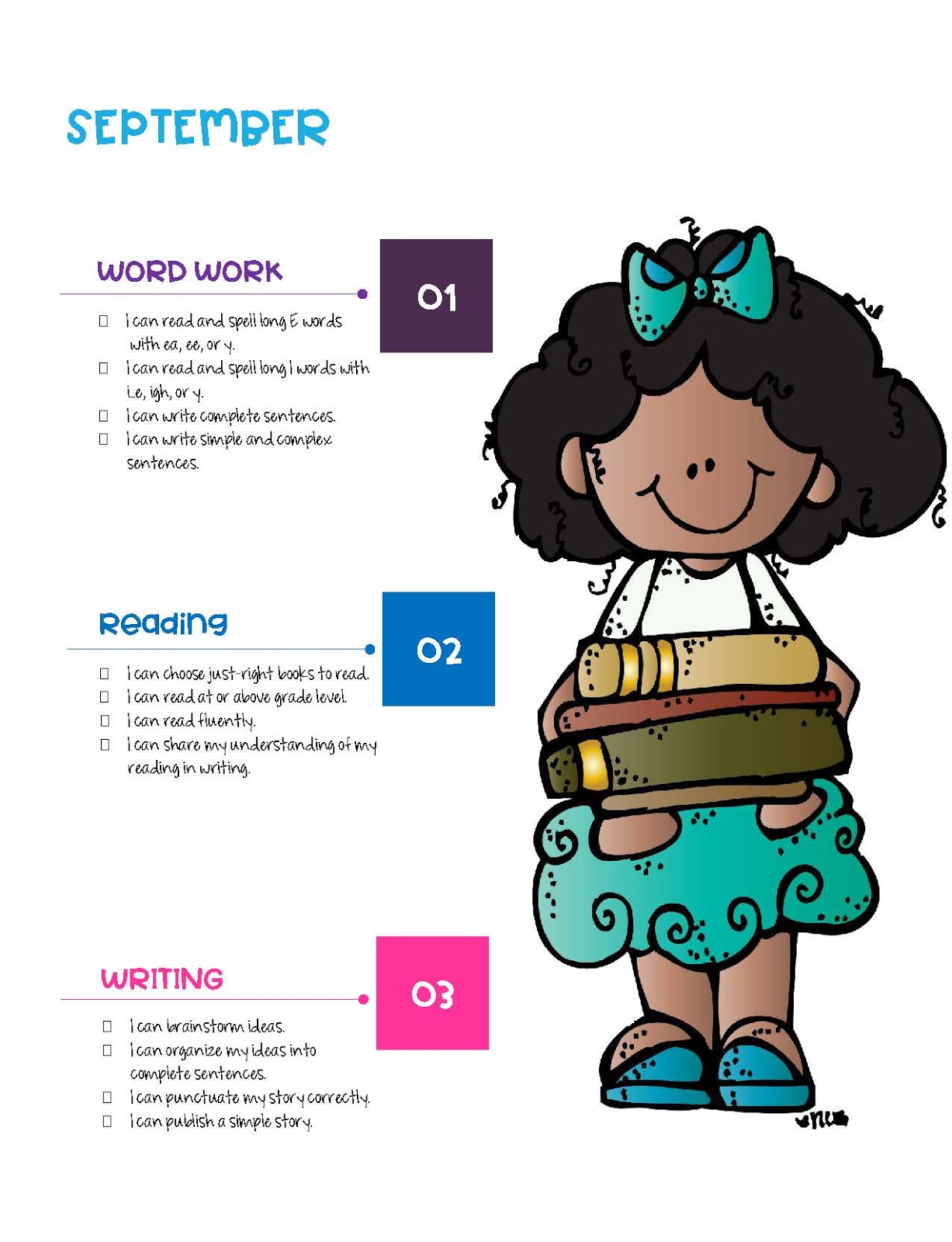
I created a pacing guide for my school year to help guide my instructional planning. A pacing guide is sometimes referred to as a curriculum map, or instructional calendar road map. The pacing guide outlines the specific subject area and details when content or topics will be taught. My pacing guide is general, rather than prescriptive. I provide a time frame in which I will cover a topic of study, but try not to provide specific lesson topics as the students provide the pacing of the lessons.


To help aid parent communication and student reflection, I am working on creating I Can statements based on my pacing guide. This allows students to monitor their progress. I highlight the bullet beside the statement as Green for Got It, Yellow for Almost There, and Red for Still Working On It. I leave bullets blank if I do not have enough data to accurately state their progress or our learning is still ongoing (we all get behind!). Students add pieces of evidence to their  I Can Statement sheet, such as writing samples, exit slips, assessments, etc. 


I would love to hear your feedback on my latest project!